There is one sentence lawyers hear almost every week: "It's all in my texts." What follows is a stack of blurry screenshots, a phone held out across the desk, and sometimes disappointment: the messages were wiped when the device was replaced, or the sender appears only as a first name saved in the contacts list.
In roughly twenty years, the text message has become one of the most common forms of evidence before French courts. An admission of debt, a threat, a work instruction issued on a Sunday evening, an acknowledgement of infidelity, a verbal business agreement confirmed in three lines: all of it regularly ends up in a case file. But between "having a message" and "holding usable evidence" lies a technical and legal gap that few people appreciate until they need to.
Here is what French law actually says in 2026 — and, above all, what you should do, starting today and before any dispute arises, so that your messages hold up in front of a judge.
The principle: in civil matters, evidence is free… but not always
The first distinction is fundamental, and yet it is routinely overlooked: everything depends on the area of law.
In criminal matters, Article 427 of the Code of Criminal Procedure lays down the principle of freedom of evidence. A text message containing threats, harassment or blackmail is admissible, and the judge weighs it according to their inner conviction. That is why screenshots are so common in complaints for psychological harassment or domestic violence.
In civil and commercial matters, the regime is more nuanced. For legal acts (a contract, an acknowledgement of debt) exceeding 1,500 euros, Article 1359 of the Civil Code requires written proof in principle. But Article 1366 of the same code treats an electronic writing as equivalent to a paper one, provided its author can be identified and the document has been created and stored under conditions that guarantee its integrity. A text message is indeed an electronic writing. It can therefore constitute documentary evidence — or, failing that, serve as a prima facie written indication (commencement de preuve par écrit), supplemented by other elements (bank statements, witness statements, email exchanges).
In employment law, the Court of Cassation has settled case law: an employer may produce text messages received by an employee on a work phone, provided they are not marked as personal. And the employee, symmetrically, may produce messages they themselves received from their employer to prove overtime, harassment or a verbal dismissal. As early as 2007, the Social Chamber held that keeping a received text message — unlike recording a phone conversation captured without the other party's knowledge — does not amount to an unfair method: whoever sends a message knows they are leaving a trace.
Remember the nuance: receiving a message and keeping it is fair. Searching through someone else's phone to extract messages is not — and may amount to a breach of the privacy of correspondence, punishable under Article 226-15 of the Criminal Code.
The major shift of 2023: unfairly obtained evidence is no longer automatically excluded
One turning point deserves attention, because it changes the picture in many cases. In a Full Court (assemblée plénière) ruling of 22 December 2023, the Court of Cassation abandoned its long-standing position of systematically excluding unfairly obtained evidence in civil matters.
From now on, the judge must carry out a proportionality review: unfairly obtained evidence may be admitted if producing it is indispensable to the exercise of the right to evidence, and if the interference with the opposing party's rights (privacy, confidentiality of correspondence) remains strictly proportionate to the aim pursued.
In practice, this does not mean you can now rummage through your partner's or your colleague's phone with impunity. Three filters remain in place:
- criminal unlawfulness still stands: breaching the privacy of correspondence remains an offence, even if the evidence ends up being admitted in civil proceedings;
- the indispensable character is assessed strictly: if there was another way of proving the fact, the unfairly obtained evidence is set aside;
- the interference must be minimal: producing ten years' worth of private conversations in full to prove a single fact will be deemed disproportionate.
Put plainly: this development opened a door, it did not knock it down.
The real weak point: authenticity, not admissibility
In practice, it is almost never admissibility that sinks a case. It is the challenge to authenticity. Before a judge, the opposing party will simply say: "That screenshot was fabricated." And they are not entirely wrong to try it: faking a screenshot of a conversation today takes a few minutes and a free app.
A screenshot on its own is therefore fragile evidence. It is worth exactly as much as the credibility of the person producing it. To strengthen it, there are several levels.
Level 1 — The carefully taken screenshot
The bare minimum, but done properly:
- capture the entire conversation, not an isolated extract taken out of context;
- include the contact details screen, showing the full phone number rather than the first name from your contacts;
- make the date and time of each message visible by displaying detailed timestamps (long press on the message, or swipe left, depending on the system);
- do not crop, annotate or blur anything.
Level 2 — Raw export and backup
Many messaging apps allow you to export a conversation as a text file. Phone backup software also produces usable files. The idea is to keep a dated, unedited file stored somewhere other than the phone itself — a simple external backup hard drive is enough to remove the risk of losing everything with your next device change or cracked screen.
One simple, free habit: email a copy of the exported file to your own address the same day. The mail server's timestamp provides an additional indication of the date.
Level 3 — A report by a judicial commissioner
This is the only genuinely solid level. The judicial commissioner (the new title for bailiffs since the 2022 merger) travels to you, records the state of the phone, describes the operations carried out, photographs the screens and draws up an official report that stands as proof unless the contrary is shown.
The cost in 2026 generally ranges between 150 and 400 euros, depending on the volume of messages and travel involved. That is expensive for a neighbour dispute, trivial for an employment tribunal case covering several months' salary. The right reflex: ask for a quote beforehand, and check whether your legal protection insurance — often included in a home insurance policy or a premium bank card — will cover it.
What operators keep — and what they do not
This is misunderstanding number one. "I'll just ask my operator for my texts." No.
French operators do not keep the content of text messages. The message passes through the message centre (SMSC), stays there for the time it takes to be delivered, then is deleted. What is kept is something else: traffic data — the fact that a message was sent from one number to another, on a given date and at a given time, sometimes with information about the cell tower's location.
This framework stems from Article L. 34-1 of the Postal and Electronic Communications Code, reworked following the decisions of the Court of Justice of the European Union. Traffic and location data are retained for one year, but access to them is reserved for judicial requisitions. A private individual cannot obtain them simply by asking.
| Item | Kept by the operator | Accessible to a private individual |
|---|---|---|
| Text message content | No | No |
| Date, time, numbers | Yes (1 year) | No, on judicial requisition only |
| Cell tower used | Yes (1 year) | No |
| Backup on your phone | Depending on your settings | Yes |
The practical consequence is brutal: if you delete a message, it no longer exists anywhere. No procedure will bring it back. Preservation is entirely down to you.
Situations where a text message makes the difference
Employment disputes
Overtime requested by message at the weekend, a dismissal announced verbally then confirmed by text, repeated humiliating remarks from a superior: employment tribunals rely heavily on these exchanges. An employee contemplating litigation should export their work conversations before handing back the company phone — afterwards, it is over.
Family litigation
Before the family court judge, messages are used to establish acts of violence, a parent's actual involvement in the child's life, or the reality of a residence. Be careful, though: producing messages exchanged between the other parent and a third party, obtained by accessing their phone, risks both the exclusion of the exhibit and criminal prosecution.
Rental or neighbour disputes
Agreement on works, a promise to return a security deposit, nuisances reported and acknowledged: here, text messages usefully complement registered letters. They never replace them for acts subject to formal requirements (notice to quit, formal demand). In this type of case, a stock of registered envelopes with acknowledgement of receipt remains the tool that genuinely starts the legal time limits running.
Recovering a small debt
An "I'll pay you back the €800 in September" counts as a prima facie written indication. Combined with an identifiable bank transfer, it is often enough to obtain an order for payment. A simple debt tracking notebook recording loans and repayments as they happen turns a jumble of vague recollections into a coherent timeline before the judge.
Seven mistakes that destroy evidence
- Deleting the conversation "because it's painful." Archive it, hide it, but do not delete it.
- Switching phones without transferring your messages. Migrating from iOS to Android in particular frequently loses text message history if no backup is made beforehand.
- Showing only the message that suits you. A judge who discovers the rest of the conversation during the hearing will mainly remember that you hid it.
- Replying and making things worse. The messages produced are those of both parties. An insulting reply to a provocation very effectively neutralises your position.
- Baiting an admission. Writing to someone for the sole purpose of getting them to say something usable borders on an unfair method, especially if the ploy is visible in the thread.
- Confusing RCS and SMS in the export. RCS conversations and classic text messages are not backed up the same way depending on the app. Check that your export really contains both.
- Letting the phone break. One cracked screen or one drop in water and the key exhibit in your case is gone. A reinforced protective case costs less than a bailiff's report.
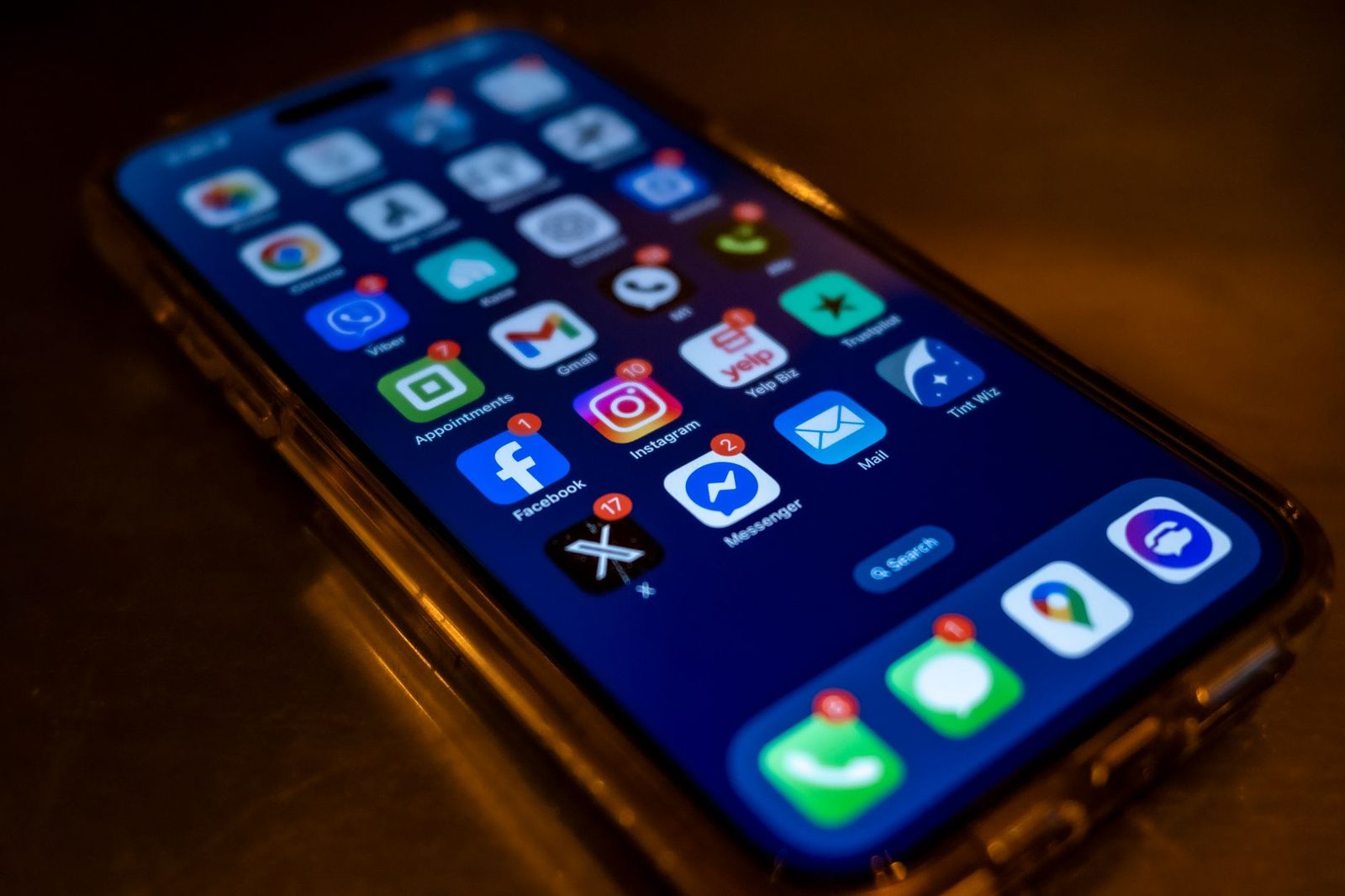
And what about your own messages — what do they reveal?
The reasoning works both ways. Everything you write by text or RCS can be produced against you, including years later, including out of any context, including by someone you trusted at the time you sent it.
This is not a call to paranoia, but to a simple reflex: a text message is not a conversation, it is a document. It is stored in plain text on at least two devices, it outlives the relationship that produced it, and it cannot be retracted. The "delete for everyone" features available in some messaging apps remove the display — not the screenshot the recipient has already taken.
For genuinely sensitive exchanges, the logic remains the one set out by the CNIL in its recommendations on electronic communications: favour end-to-end encrypted messaging with scheduled deletion, and treat text messaging as a semi-public channel. Those who regularly handle confidential documents often add a physical security key to protect the associated accounts, plus an accessible book on personal data protection to understand what, in their day-to-day habits, leaves the most traces.
In summary
- Text messages are admissible as evidence — broadly so in criminal matters, subject to conditions in civil ones.
- The real risk is not inadmissibility but a challenge to authenticity: an isolated screenshot is worth little.
- Operators do not keep the content of messages: backing them up is down to you alone, starting today.
- A judicial commissioner's report turns doubt into certainty, at a cost often covered by legal protection insurance.
- Since December 2023, unfairly obtained evidence may be admitted in civil proceedings, but subject to a strict proportionality review — it is not a licence to go snooping.
The best preparation for a dispute is still the one you carry out before it exists: regular backups, complete conversations, and the habit of writing your messages knowing that they might one day be read aloud in a courtroom.
Sources: Civil Code (Articles 1359, 1366, 1367), Code of Criminal Procedure (Article 427), Criminal Code (Article 226-15), Postal and Electronic Communications Code (Article L. 34-1), Court of Cassation — Full Court, 22 December 2023, Social Chamber, 23 May 2007; CNIL recommendations on the security of electronic communications.