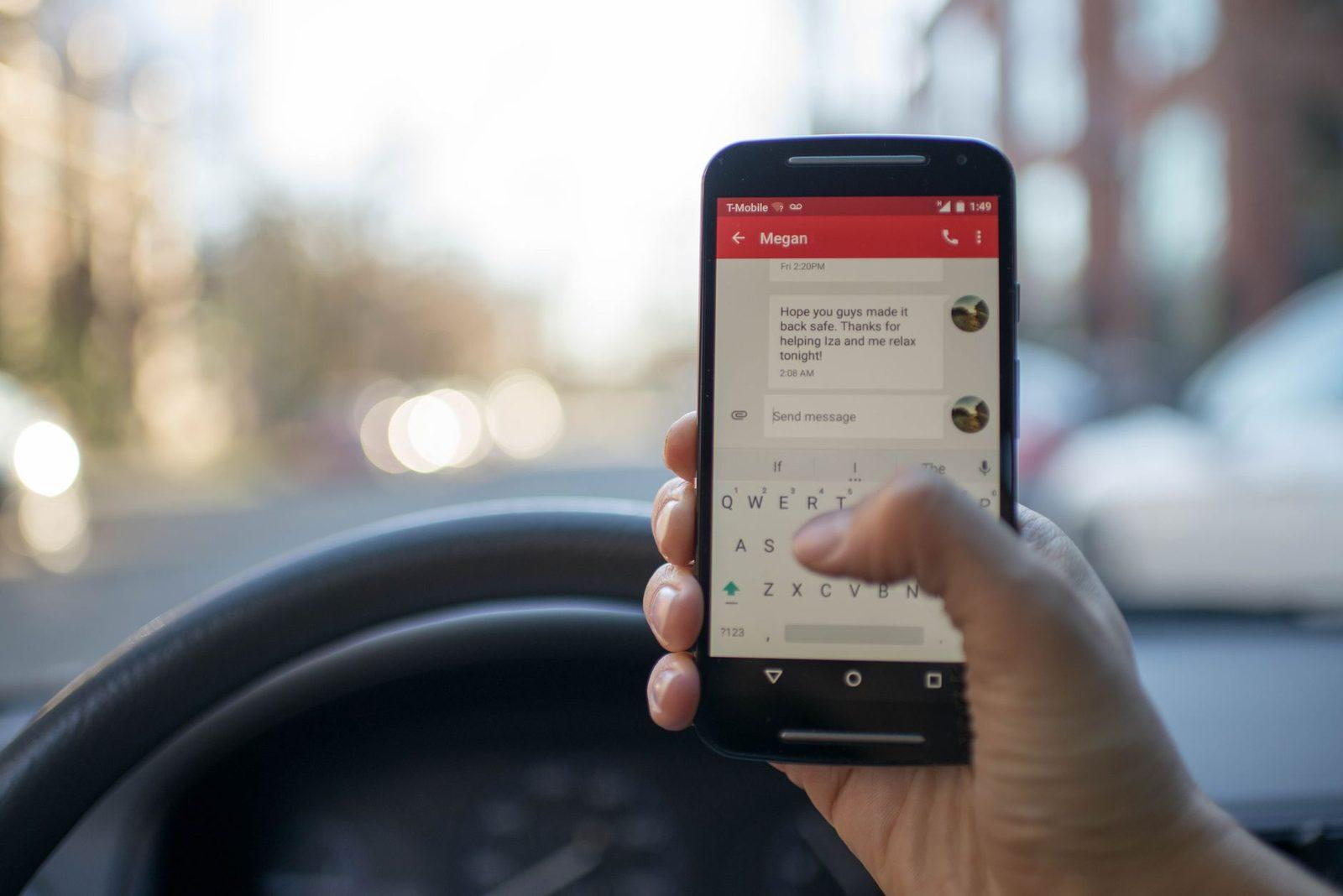
"Hello, your energy renovation application no. FR-4471 has been approved. Grant amount: €9,240. Confirm your details before 12/10 to release the payment." I'd had my energy performance certificate redone just three weeks earlier. I thought it was the logical next step. I clicked, I gave my name, my address, my tax number, my bank details. The "adviser" called me back the next day about an "advance on processing fees" of €390."
This account, gathered from the owner of a detached house in Loire-Atlantique, sums up a shift that has been visible for the past two years. Fraudulent home-improvement canvassing no longer travels only by telephone — banned since 2020 for energy renovation work — but by text message, which in practice largely escapes that ban, and above all under a fearsomely well-imitated administrative disguise.
The hook is no longer the promise of a bargain. It is the impression that the government, the Anah or your building manager has just written to you.

Why housing has become the perfect hunting ground
A regulatory calendar everyone half-knows
The housing sector combines three features that make it a perfect vehicle for smishing:
- Real deadlines that get plenty of media coverage. The progressive ban on renting out homes rated G and then F, the requirement for a collective energy performance certificate in certain apartment buildings, the energy audit required before selling an energy-inefficient property, the setting up of a works fund. Every one of these measures has generated press headlines, letters from building managers and conversations between neighbours.
- A complexity that discourages checking. Between MaPrimeRénov' (run by the Anah), Energy Saving Certificates (CEE, paid out by energy suppliers), the interest-free eco-loan and local grants, even an attentive homeowner does not always know who is supposed to be contacting them.
- Large sums of money. A five-figure grant commands a level of attention — and of credulity — that a fake €2.30 parcel fee will never achieve.
The fraudster therefore has no need to invent anything: all they have to do is graft their message onto an existing worry. It is the same mechanism as the fake texts from the French health insurance service or the tax authorities, already extensively documented by Cybermalveillance.gouv.fr, but applied to a subject where the amounts at stake are far higher.
Cold calling is banned… but not texting, in practice
The law of 24 July 2020 bans telephone canvassing for energy renovation work. Since then, the national cold-calling opt-out scheme has been strengthened, and the rules have moved towards a principle of prior consent from the consumer for any commercial approach made by telephone.
In real life, two gaps remain:
- Scammers could not care less about the law. It does not stop them, it simply pushes them towards less closely monitored channels — SMS, messaging apps, WhatsApp.
- The bulk texting platforms used are often hosted outside Europe, with short codes or disposable mobile numbers cycled through by the thousand.
The result: text messaging has become the favoured channel for home-improvement fraud, because it is cheap, it requires no human operator, and it leaves a written trail that looks official.
The four most common scenarios in 2026
1. The "approved grant application"
The message announces that an application already exists, complete with a reference number, an amount, sometimes even your town. It invites you to "confirm your details" or to "finalise the payment".
The trap rests on a reversal: you are not applying for a grant, you are being told it has already been awarded. Psychologically, the question becomes "how do I avoid losing this money?" rather than "does this grant even exist?".
A simple check: MaPrimeRénov' never opens an application on your behalf. An application only exists if you created it yourself on the official public service website, using your own login details. If you have not submitted anything, there is nothing to approve.
2. The fake "mandatory" energy certificate or audit
"Your property has no valid energy performance certificate. Compliance mandatory before 31/12/2026 or a fine will apply."
An energy performance certificate is indeed mandatory in certain situations: a sale, a letting, and a collective certificate for some apartment buildings. But there is no individual fine ever sent by text message, no "compliance" payment to be made online by bank card, and no public body that invoices you for an assessment.
Moreover, an assessor must be certified: the list of certified professionals is public and can be consulted on the official directory of assessors maintained by the Ministry for Ecological Transition. That is the reflex to have before signing anything at all.
3. The fake building manager or fake call for funds
This is the variant growing fastest, and the most expensive. The message presents itself as coming from the building manager: a change of bank details for service-charge payments, works voted through at the general meeting, an urgent adjustment.
Here the fraudster often holds genuine information: the name of the development, the name of the managing agent, sometimes an approximate figure for the service charges. This data circulates after leaks, after hacks of managing agents' mailboxes, or simply because a plaque in the building's entrance hall displays the firm's name.
Absolute rule: a change of bank details is never confirmed via a link received by text message. You call the building manager back on the number printed on an old paper service-charge statement — never the one given in the message.
4. "Zero out-of-pocket cost" and the deposit
The text promises work that is fully funded, then a caller asks for an advance: processing fees, a materials deposit, "releasing the Anah transfer". No public grant is ever released in exchange for a payment up front. It is the most universal rule in the whole fight against fraud: you never pay in order to receive money.
Sorting table: genuine message or attempted fraud?
| Clue in the text | Legitimate message | Warning sign |
|---|---|---|
| Origin of the contact | You started a procedure | You asked for nothing |
| Link | A .gouv.fr domain or your known building manager's site | Unknown domain, shortened link, near-miss spelling |
| Request | Information, appointment reminder | Bank details, tax number, proof of identity |
| Deadline | Several weeks | "within 48 hrs", "final reminder" |
| Payment | None, or an invoice after the work | Deposit, processing fees, security payment |
| Personalisation | Your name and your real file | Generic name or, conversely, accurate data but unexpected contact |
The last point deserves a word of explanation, because it is the one that catches out cautious people. A message containing accurate information is not legitimate for that reason alone. A fraudster who knows your address, your property's year of construction or the name of your apartment block has simply bought or obtained a database. Accuracy is not proof of authenticity; it is now the standard in fraud.
How to check, in practical terms, in five minutes
Never start from the message
The rule fits into one sentence: you step outside the text message before checking. For as long as you are clicking links inside the message, you remain in the world the fraudster has chosen, including when the page displays an official logo and a padlock.
The right sequence:
- Close the text. Do not click, do not reply, do not call the number given.
- Open the official site yourself by typing the address, or go through France Rénov', the public service for home renovation, which has advisers reachable free of charge and advice centres spread across the country.
- Log into your personal account to see whether an application really exists.
- For an apartment building, contact the managing agent using a number taken from an earlier paper document, or ask the residents' committee.
- Keep the text for as long as the checks take: it will be useful if you report it.
The "two channels" reflex
A serious check uses a different channel from the one the request arrived on. Text received → check by telephone on a known number, or by going in person to a counter. It is tedious, but that is exactly what the fraud is trying to avoid: it thrives on shortcuts.
For home-improvement files, it is also worth keeping a physical record. A simple document folder with dividers holding quotes, certification documents, correspondence with the managing agent and letters from the Anah means that, on the day a text arrives, you can find the real phone number and the real file number in thirty seconds. It is a far more effective anti-scam tool than it looks.

Shrinking the attack surface before the first text even arrives
Limiting how widely your number circulates in property matters
An online valuation, a quote request on a comparison site, signing up to a platform that connects you with tradespeople: every one of these actions feeds databases that are then resold. Homeowners who start renovation work see their volume of unwanted texts rise noticeably in the following weeks.
A few simple measures:
- Use a secondary number for quote forms and comparison sites, and keep your main number for family, your bank and your doctor.
- Always untick the "sharing with our partners" boxes. Under the GDPR, you can ask the company concerned to delete your data at any time, and refer the matter to the CNIL if it refuses.
- Register with the cold-calling opt-out scheme, which does not stop fraudsters but does dry up legal canvassing, and therefore the background noise.
- Reply STOP only to messages you have identified as coming from genuine companies. With a fraudulent text, replying STOP merely confirms that your number is active.
Securing what could be compromised
If you handle renovation paperwork by email, that mailbox becomes a target: it contains bank details, quotes, the identity of your building manager. Switching on two-factor authentication, avoiding connections on the public Wi-Fi networks of building sites or agencies, and storing sensitive documents on offline media all limit the damage. For apartment-block archives, an encrypted USB stick or a secure external hard drive avoids keeping everything in a cloud whose access depends on a single password.
On the phone itself, recent systems are filtering better and better: Android has strengthened its scam detection in the Messages app in France, and iOS lets you sort unknown senders. These filters catch part of the volume, never all of it — they are no substitute for checking.
Finally, for older people, who are often homeowners and therefore especially exposed to this type of message, a big-button mobile phone with a restricted contact list, or a laminated card kept near the phone listing the three trusted numbers to call if in doubt, does more for their safety than any software.
You have already replied: what to do next
Within the hour
- If you gave out your bank details: alert your bank and ask for the account to be monitored. Bank details alone do not allow someone to empty an account, but they do allow fraudulent direct debits. Check your direct debit mandates and cancel any you do not recognise.
- If you entered a bank card: block it immediately. An unauthorised debit must be refunded by the bank, except in cases of gross negligence on your part — that is the principle laid down by the French monetary and financial code.
- If you paid a deposit by bank transfer: contact your bank as quickly as possible; a transfer can sometimes be recalled if it has not yet been executed.
In the following days
- Report the text to 33700 by forwarding it, then sending the sender's number as the service requests. This is the official scheme for reporting unwanted text messages in France.
- File a complaint, online or at a police station. Even with no hope of tracing the perpetrator, filing serves to assert your rights with your bank and your insurer.
- Report it on the Cybermalveillance.gouv.fr platform, which points you towards the appropriate steps and towards local service providers.
- Warn your building manager and your neighbours if the message claimed to come from the building's management: these campaigns target a whole block, not one person.
If you have signed a quote
Signing a works contract following a canvassing approach opens a 14-day cooling-off period. Where energy renovation work has been sold through illegal cold calling, the contract is in principle void. A registered letter with acknowledgement of receipt remains the preferred format — a batch of pre-filled registered-post envelopes in a drawer saves you losing precious days hunting for the right form at the post office.
Key takeaways
The home-improvement text scam has changed face: it no longer sells, it administers. It talks about applications, compliance, reference numbers, deadlines. It is precisely that vocabulary which should trigger suspicion when it arrives through a channel that is anything but administrative.
Three sentences are enough to protect yourself:
- A public grant is not announced by text message; you apply for it.
- You never pay in order to receive money.
- You always check through a channel other than the one the message came on.
And if doubt persists, the most useful question remains the simplest: did I start this procedure? In the vast majority of cases the answer is no — and that is enough to classify the message.