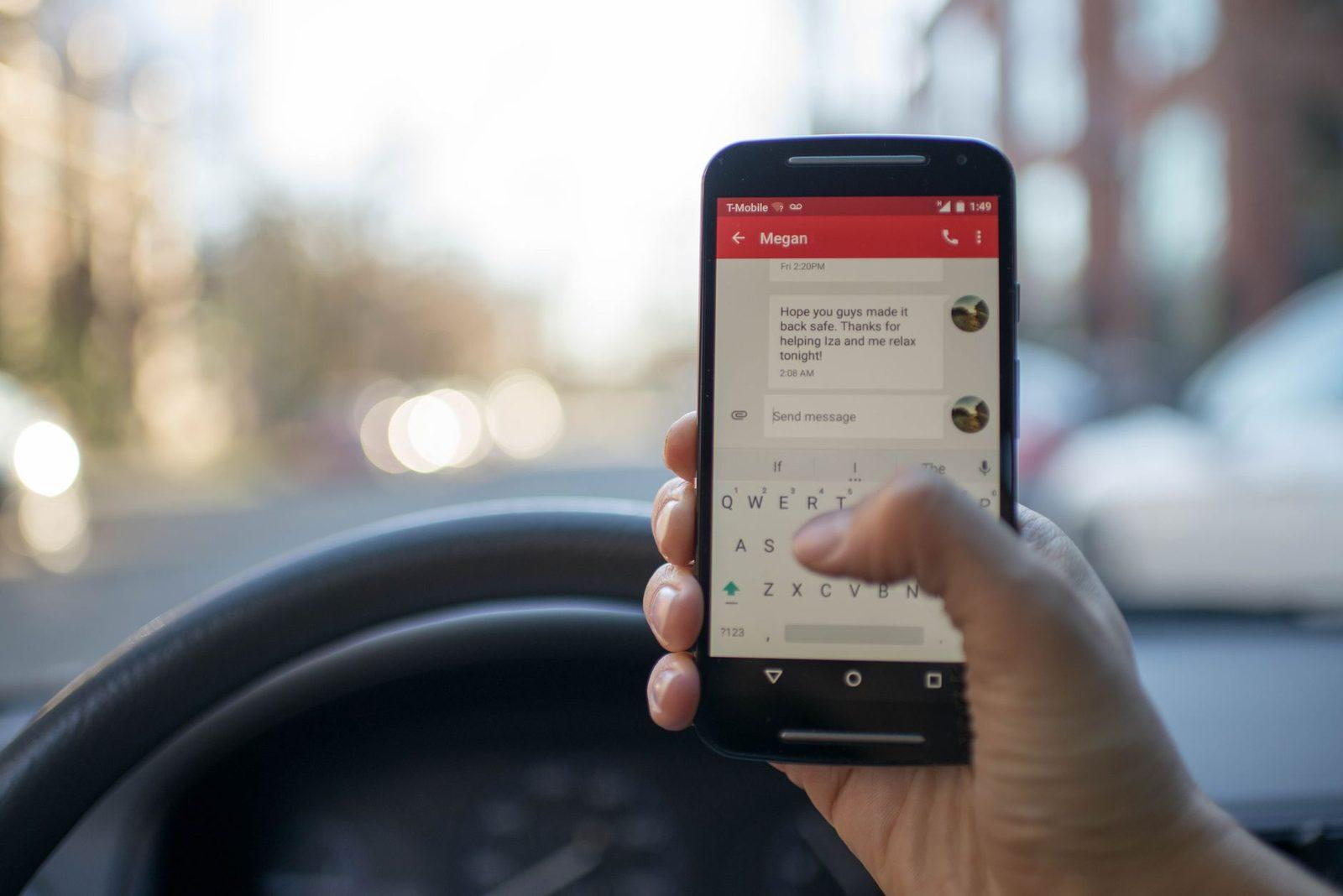
Short answer: a garage, a vehicle inspection centre or a car insurer has every right to send you a reminder text about an upcoming deadline, because you gave them your number and registration plate when work was carried out. These messages come from a 5-digit short code in the 3xxxx range or from an alphanumeric sender, and they never ask for payment via a link. The moment a "car-related" text demands money, a bank card or an update to your vehicle registration document through a link, it's a scam: report it to 33700.
In late September, Karim had his brake pads replaced at a garage in the Lyon suburbs. Three weeks later, his phone showed four messages relating to his car: a reminder from the garage about the 120,000 km service, a follow-up from an inspection centre announcing that his roadworthiness test was due in six weeks, a notification from his insurer about the quarterly direct debit, and a fourth message — "Your vehicle registration certificate is awaiting regularisation: €1.80 delivery fee" — with a link to a site that looked like the ANTS website.
The first three were genuine. The fourth seemed the most harmless of all, because it asked for less than two euros. That is precisely how the scam works.
Why does your garage have your phone number?
Because you gave it to them when the repair order was opened, and because the text message has become their main reminder channel — ahead of phone calls, and far ahead of letters.
When you leave a vehicle at a workshop, the professional records at a minimum your name, your mobile number, the registration plate, the mileage and the nature of the work. That data is used first to reach you during the repair ("your vehicle is ready", "an additional quote is waiting for you"), then feeds a workshop management system able to calculate:
- the theoretical date of your next service (based on your observed annual mileage);
- the due date of your roadworthiness test, derived from the date of first registration;
- seasonal needs (winter tyres, air conditioning, battery before the first cold spells).
The result: a garage, a chain of car service centres or a dealership can produce highly personalised texts without knowing anything more than what you declared yourself. It's the same mechanism described in our article on texts received after an in-store purchase: a number given for a practical purpose often ends up being used for marketing too.
Deadline reminder or marketing prospecting?
The distinction is a legal one, and it changes your rights.
| Type of message | Example | Legal basis | How to stop it |
|---|---|---|---|
| Information linked to the service | "Your vehicle is ready", "quote awaiting approval" | Performance of the contract | Cannot be opted out of while the work is ongoing |
| Deadline reminder for a similar product | "Your service is due", "your roadworthiness test is coming up" | Prospecting for similar products, accepted by the CNIL for an existing customer | Reply STOP to the number given |
| Marketing offer unrelated to the purchase | "30% off tyres", "air conditioning package" | Requires your consent or a tightly framed legitimate interest | Reply STOP, then file a CNIL complaint if it continues |
| Message from a partner you don't know | A service centre you've never visited, an insurance broker | Often a resold database | STOP, then request the origin of the data |
The CNIL points out that marketing by text message to an existing customer is allowed without prior consent provided it concerns products or services similar to those already purchased, and provided a simple means of refusal is offered in every message. A service reminder after mechanical work falls within that scope. An offer from a third-party platform to buy your vehicle does not.
How can you recognise a genuine text from a garage or inspection centre?
A legitimate message is identifiable by four markers: an identifiable sender, information you can verify elsewhere, the absence of any payment request, and a STOP opt-out.
The four markers of a legitimate message
- The sender. A professional sending texts in bulk goes through an aggregator and appears either as a 5-digit short code (the 3xxxx, 2xxxx and 6xxxx ranges) or as an alphanumeric sender (the brand name instead of a number). They don't write from a personal 06 or 07 mobile number — unless it's the mechanic who gave you his own mobile. To understand what each range covers, see our guide on identifying a short code or an unknown sender and the short codes page.
- Information you already hold. The exact date of your next roadworthiness test is written on your last inspection report and on the sticker on your windscreen. The mileage of your last service appears on your invoice and in your service book. A genuine reminder matches those documents.
- No request for payment or proof of identity. A deadline reminder offers to book an appointment. It asks for neither a bank card, nor a driving licence number, nor a photo of your registration document.
- A STOP opt-out. Every marketing text must state how to object, usually "STOP au 36xxx".
Keeping your service book and your roadworthiness test reports in a single folder — a registration document holder tucked into the glovebox is enough — changes everything: you can check a due date in thirty seconds instead of taking the text at its word.
The three most common fake "car" texts in 2026
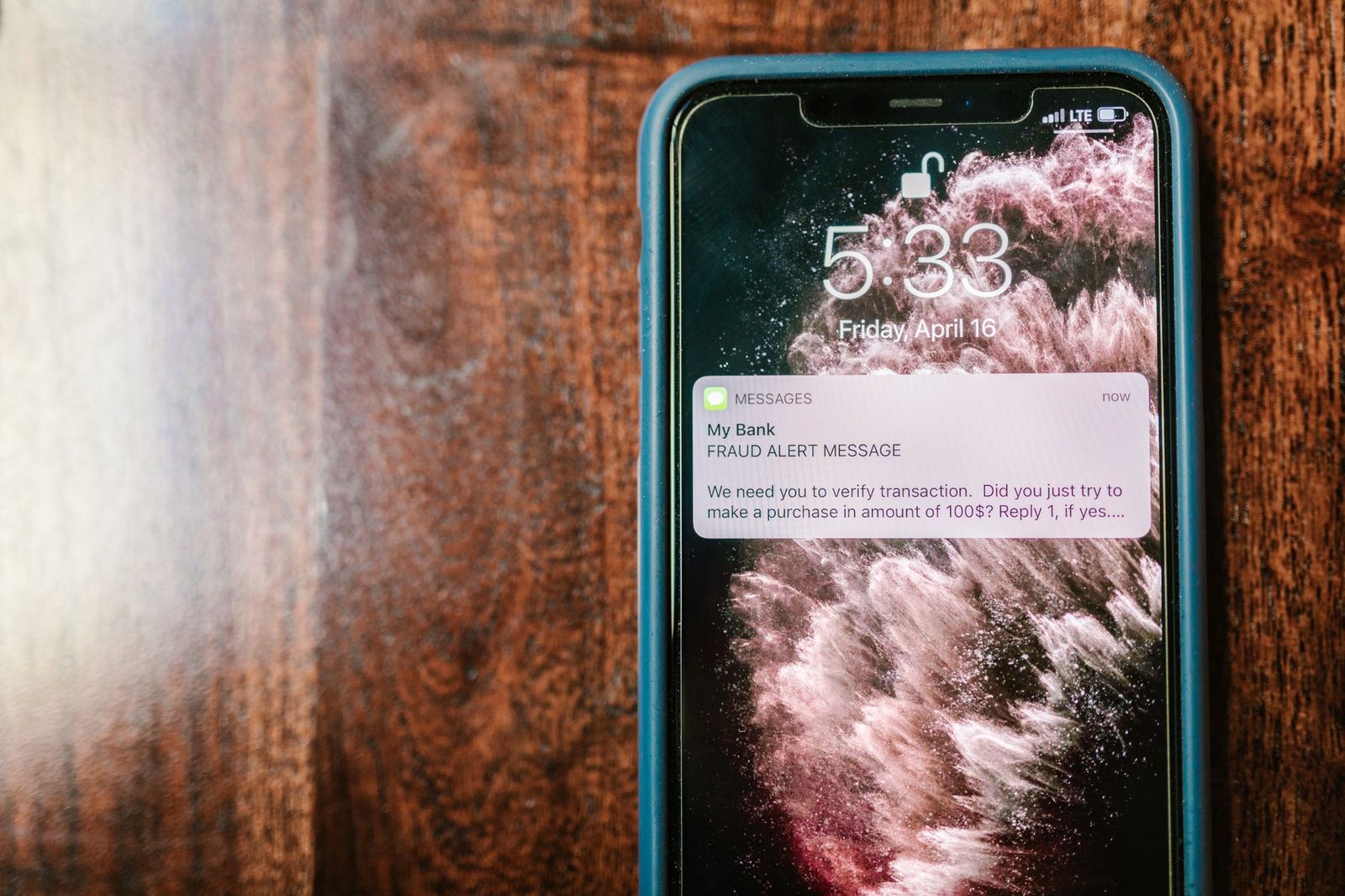
1. The fake registration document text. The message claims your registration certificate is "pending", "awaiting regularisation" or "ready to be dispatched" in exchange for a few euros in delivery fees. The link imitates the ANTS website (Agence nationale des titres sécurisés). A useful reminder: registration procedures are carried out only on ants.gouv.fr, and the ANTS states that it never sends texts demanding payment for the delivery of a document. Genuine delivery fees are paid at the time of the application, on the official site, not through a link received afterwards.
2. The fake mandatory roadworthiness test reminder. "Your roadworthiness test expired on 02/10. €135 fine if you are stopped. Settle your file here." Two implausibilities: no authority warns you of an expired test by text message, and a fine is never "settled" on a site other than amendes.gouv.fr. The roadworthiness test is an obligation you track yourself, from the date of your last inspection report; the central technical body does not keep a reminder database for private individuals by text.
3. The fake insurance or bonus-malus refund. "Following the review of your bonus-malus, an overpayment of €112.40 is owed to you." This is the automotive variant of the tax overpayment text, whose mechanics we detailed in the article on scam texts promising a refund. No insurer issues a refund through a banking form reached from a link in a text: a refund goes to the IBAN already recorded in your policy.
What all three have in common: the amount demanded is small (€1.80, €2.99, €4.95). The goal isn't the stated charge, it's capturing your full bank details, which are then reused for far larger debits.
Why are car-related texts so convincing?
Because registration plates, models and due dates circulate far more widely than motorists imagine.
Between the garage, the inspection centre, the dealership, the insurer, the broker, the buy-back platform where you requested a valuation and the spare parts website, your vehicle data has been entered into a dozen different databases. A single poorly protected link in the chain is enough to feed a smishing campaign armed with accurate information: your make, your model, sometimes your plate.
This is exactly the phenomenon described for parcels in this delivery text that knows your name and address. Cars add a particular twist: a registration plate is publicly visible, and many online resale ads still display the plate, the mileage and the town. Enough to write a highly plausible message without any data breach at all.
One detail that almost always gives the fake away
A genuine automotive business talks about your vehicle as you know it: "your Clio IV", "your 120,000 km service", "your appointment on the 14th at 9 a.m." Fraudulent campaigns stay generic ("your vehicle", "your file") because they are sent to hundreds of thousands of numbers at once. The exception: campaigns fed by a stolen database, which quote the plate. In that case, the only reliable criterion is the substance of the message once again: is it asking for money or credentials?
How can you stop reminder texts from a garage without losing your service tracking?
By replying STOP to the number given, then asking the garage in writing to keep your data for servicing purposes while removing you from the marketing list.
- Reply STOP to the short code mentioned in the text. The reply is charged at the price of a standard text, so it's included in virtually every plan. Allow up to a few working days before it actually takes effect.
- Keep a record. A screenshot of the message and of your reply, with the date. That's the evidence you'll need if the messages start again.
- Write to the garage or the chain (by email, to the contact address or to the data protection officer if there is one): ask to be removed from text-message marketing, specifying that you wish to keep notifications linked to ongoing work. The two uses are distinct and must be separable.
- If messages continue beyond a month, file a complaint with the CNIL through its online service, attaching your screenshots.
- Register with Bloctel for cold calls — useful for car insurance phone follow-ups, but with no effect on text messages.
If you change vehicles and garages regularly, the dedicated-number strategy remains the most effective: a secondary number reserved for retailers and online forms, as explained in our second-number method. A no-contract prepaid SIM card slipped into a second slot, or an old dual-SIM phone, does the job.
What should you do if you clicked on a fake registration document text?
Act within the hour: nothing is lost if you haven't approved a payment, and a great deal is still recoverable even if you have.
- Don't confirm any code you receive afterwards. A 6-digit code arriving by text after you've entered your details serves to authorise a payment. Passing it on, to anyone at all, amounts to signing. That's the scenario described in "Don't share this code with anyone".
- Block your card from your banking app, then call your bank. If debits have already gone through, request a refund under articles L133-18 et seq. of the French Monetary and Financial Code (unauthorised payment).
- Report the message to 33700 by forwarding it, then sending the sender's number when the service asks for it. The scheme, run by the operators via the AF2M, is used to get the numbers and links involved shut down. The details of how reports are handled are explained on our reporting to 33700 page.
- File a complaint at a police station, a gendarmerie or via the THESEE platform if you have suffered a financial loss.
- Monitor your ANTS account: if you have sent identity documents, impersonation may be aimed at requesting a duplicate. A password manager helps you cleanly regain control of the accounts concerned.

The three-question verification reflex
Before touching a link, ask yourself these three questions. They are enough in almost every case.
| Question | If the answer is… | Conclusion |
|---|---|---|
| Is this message asking me for money, a bank card, a code or an identity document? | Yes | A scam, in 99% of cases |
| Does the stated due date match my roadworthiness test report or my servicing invoice? | No | Message to ignore |
| Is the sender a short code or a brand name I recognise? | No, it's an unknown 06/07 number | To be checked by calling the garage back on its official number |
And the rule that sums it all up: you never verify a text from within the text itself. You call the garage back on the number shown on its invoice, you log in to ants.gouv.fr by typing the address, you open your insurer's app. Two minutes more, zero risk.
An up-to-date car service record book and a plastic wallet for your vehicle documents are, from this point of view, worth more than any spam filter: they give you back the one thing the scammer exploits, your uncertainty about your own deadlines.
Frequently asked questions
Can a vehicle inspection centre send me a reminder by text?
Yes, if it's a centre where you have already had your vehicle inspected: it knows the date of your last report and can follow up as the deadline approaches. The message must include a STOP opt-out and must never ask for an online payment.
Does the ANTS send texts about vehicle registration documents?
The ANTS may send notifications about the progress of an application, but never a request for payment via a link for "delivery fees". Every procedure is carried out on ants.gouv.fr, typing the address yourself. A text asking for €1.80 or €2.99 is fraudulent.
Does replying STOP to a text from a garage cost money?
No, a STOP reply is charged at the standard text message rate, so it's included in unlimited plans. It's only chargeable from certain prepaid cards with no texts included.
How can I find out who owns the short code that sent me a service reminder?
The brand name almost always appears in the body of the message. Otherwise, the directory of SMS short codes maintained by the operators and the AF2M makes it possible to identify the publisher; our page on short codes details the 3xxxx, 2xxxx and 6xxxx ranges.
I received a text from a garage I've never visited: is that illegal?
If you're not a customer and have never given consent, the prospecting is unlawful. Reply STOP, then ask the company where your data came from; if you don't get a satisfactory answer within a month, refer the matter to the CNIL.
Updated on 16 October 2026. Reporting procedures (33700) and vehicle registration processes (ants.gouv.fr) may change: check the information on the official websites before taking any action.