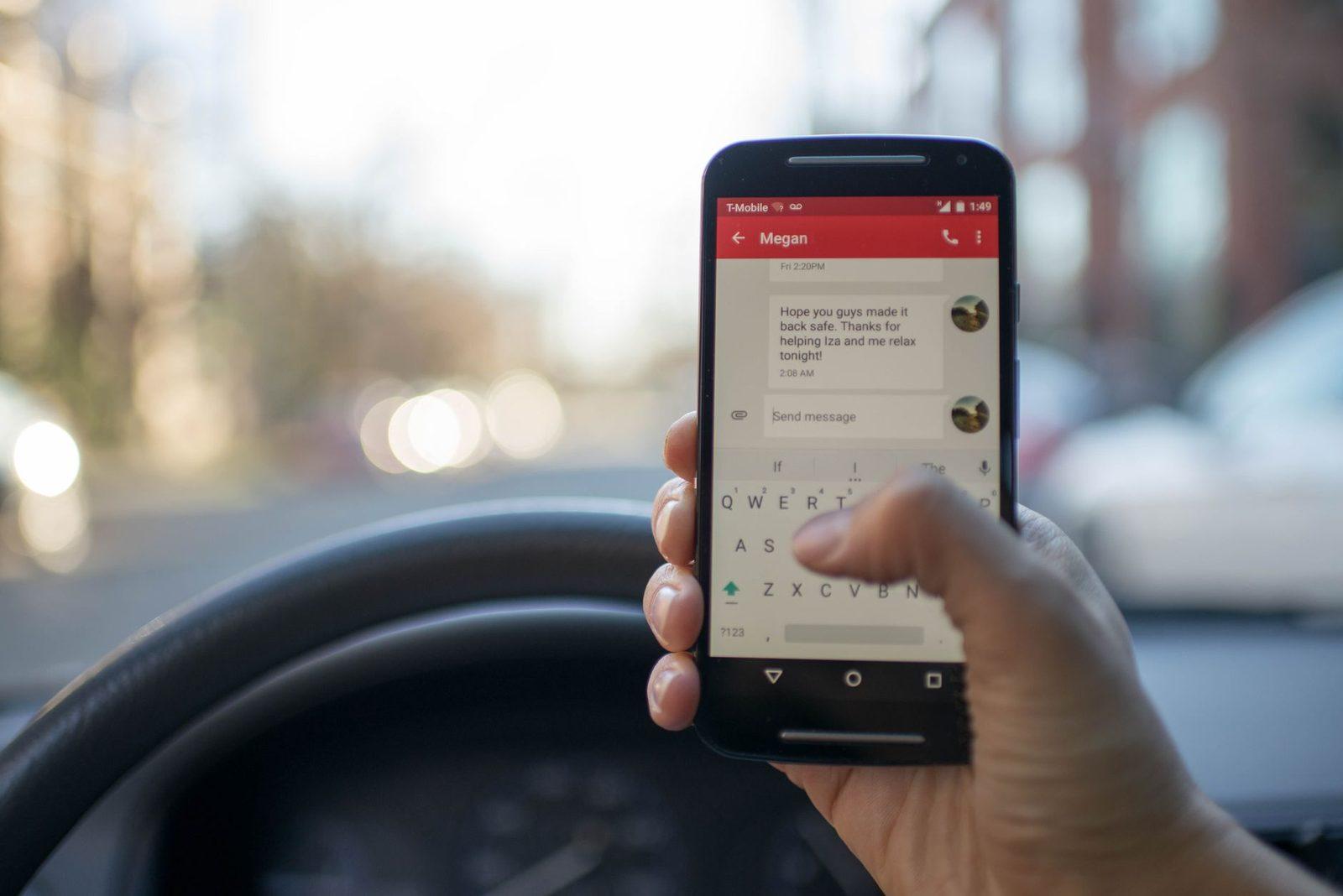
Short answer: yes, a notary's office, a bank or a broker really do send you text messages during a property purchase — reminders about the signing appointment, a missing document, loan approval, a validation code. These messages come from a short code (36xxx, 38xxx), an alphanumeric sender ID or the office's landline, and they never ask you to confirm bank details, approve a transfer or click a link to "secure the funds". As soon as a text involves money, don't reply: call the office back on the number printed on the deed.
Updated 2 November 2026.
Buying a home is probably the only moment in your life when you will transfer tens of thousands of euros to someone you have met two or three times. It is also a moment when your phone number gets passed around: estate agency, notary's office, broker, bank, mortgage insurer, surveyor, sometimes the removal company. Lots of people, lots of messages — and a timetable that fraudsters know just as well as you do.
The result: between the preliminary contract and the final signing, your phone fills up with texts, some of them perfectly legitimate, and one or two of which could cost you the price of a flat. Here is how to tell them apart, methodically.

Do notaries really send text messages?
Yes, and it has become routine. Practice management software used by notaries' offices (Genapi, Fiducial, iNot and others) includes notification modules that serve three very concrete purposes:
- appointment reminders: signing the preliminary contract, reading of the deed, handover of the keys, with the date, time and address of the office;
- document requests: proof of address, birth certificate, home insurance certificate, bank statement;
- progress updates: "your file has moved to drafting", "the funds have been received", "the deed has been signed, your ownership certificate is available".
These messages are free to receive, short, and often signed with the name of the office or of the clerk handling your file. They can arrive from a short code, from an alphanumeric sender ID, or from a landline number starting 01 to 05 — which still surprises a lot of people, even though it is perfectly possible from a geographic number.
One essential point: a notary is a public officer. They don't run sales campaigns, they don't sell products, they won't offer you an "investment", and they have no reason to contact you outside the matter in progress. Any "notarial" text that looks like marketing isn't one.
Which legitimate texts should you expect during a property purchase?
The table below sums up the senders genuinely involved in a purchase, and what they can and cannot ask you for by text.
| Sender | What they legitimately send | What they NEVER ask for by text |
|---|---|---|
| Notary's office | Appointment reminder, missing document, confirmation that funds were received | Bank details, a transfer, a banking code |
| Lending bank | 3-D Secure validation code, transaction alert, adviser appointment | Entering your login details via a link |
| Mortgage broker | File progress, agreement in principle, document chasers | Fees to be paid online urgently |
| Mortgage insurer | Confirmation of cover, health questionnaire to complete in your online account | Your bank details by reply text |
| Estate agency | Viewing, offer accepted, handover of keys | A deposit to transfer without a deed |
| Surveyor, land surveyor | Appointment slot | A payment via a link |
All these professions use text messages because they get read. None of them has any reason to send banking information that way: regulations require traceable channels (the deed, registered post, a secure client portal, a banker's draft, a transfer to an IBAN set out in the deed or in a signed letter).
Why is the moment of transfer the weak point?
Because it brings together three perfect conditions for a fraudster: a large sum, a date known in advance, and a buyer who is expecting to receive payment instructions.
Depending on how it's described, the fraud is known as fake IBAN fraud or bank detail change fraud. The mechanism is always the same:
- the fraudster learns that a sale is under way (a compromised mailbox at an agency, a seller or a buyer, a data leak, a listing withdrawn from a property portal);
- they pose as the notary's office, first by email then by text, often a few days before the signing;
- they announce a "change of account", a "new escrow procedure" or an "error on the previous IBAN";
- they provide a money-mule IBAN, sometimes in another SEPA country, and apply pressure: "the funds must be received before 4 p.m. or the signing will be postponed";
- once the transfer has gone, the account is emptied within hours.
France's Direction générale de la concurrence, de la consommation et de la répression des fraudes (DGCCRF, the consumer protection and anti-fraud authority) and cybermalveillance.gouv.fr both document this kind of fraudulent payment order: it relies on no technical flaw at all, only on the credibility of a message sent at the right moment.
The Conseil supérieur du notariat (High Council of Notaries) also points out on notaires.fr that an office's bank details do not change while a matter is in progress, and that no transfer request should ever be accepted on the basis of an email or a text alone.
The rule is simple and admits no exception: an IBAN received by text or email must never be entered without being confirmed by voice, on a call that you make yourself, to a number you found somewhere other than in the message.

How do you check a text that mentions money?
Four checks, in this order, before taking any action.
- Never use the channel the message came from. No reply to the text, no clicking the link, no calling the number given in the message. The fraudster controls everything they hand you.
- Call the office back on its official number. The one on the signed preliminary contract, on paper correspondence from the office, or in the official directory of notaries on notaires.fr. Ask for the clerk handling your file by name.
- Compare the IBAN with the one in the deed. The details of the office's account — often an account held with the Caisse des dépôts et consignations — are set out in black and white in the documents. An IBAN starting with an unexpected country code is an immediate red flag.
- Make a test transfer if your bank allows it. A small amount, then a confirmation call to the office before sending the balance. It's slow, it's tiresome, and it's infinitely cheaper than a lost transfer.
For files where you handle a lot of paperwork, keeping a physical copy of the pages containing the IBAN helps: many buyers file everything in a signature folder or document binder and check against the original document rather than an attachment, since a paper original can't be forged remotely.
What about validation codes from the bank?
During a property purchase, your bank will legitimately send you codes: approving a large transfer, electronically signing the loan offer, strong authentication on your online account. Those texts are normal.
What isn't normal: being phoned and asked to read out the code, or to "approve something in order to cancel a fraudulent transaction". That's the fake adviser scenario, which we covered in detail in our article on the "do not share this code with anyone" texts. A code received by text is never shared with anyone, ever — including someone who knows your name, your bank and the exact amount of your loan.
What do the fake property-purchase texts look like?
Here are some recurring wordings, paraphrased:
- "Office of Maître X: following a change of bank, please use the new IBAN for the balance of the purchase. Urgent matter."
- "Your mortgage no. 0043 is awaiting an arrangement fee of €149. Settle within 24 h: link."
- "Your loan application has been refused by the lender. New free assessment here: link."
- "Mortgage insurance: your cover will be cancelled for non-payment. Update your card."
- "Visale guarantee / deposit: complete your file to release the funds."
The markers are always the same: artificial urgency, a shortened link, a small sum to get you started or, conversely, the exact amount of your transaction (proof that the fraudsters got hold of a scrap of information), and a sender number starting 06/07 where the office usually uses a short code. If you want to decode the sender itself, our guide to decoding a short code or an unknown +33 number sets out the method range by range.
Watch out for one counter-intuitive detail: a fraudulent text can appear inside your bank's genuine message thread, because the alphanumeric sender ID can be spoofed. That's sender spoofing: where a message sits in your messaging app is not proof of authenticity.
Where do fraudsters get information about your purchase?
Not from tapping your phone. The sources are far more mundane:
- a compromised mailbox somewhere in the chain (seller, buyer, agency, sometimes a member of the office's staff): the fraudster reads the exchanges and waits for the right moment;
- online listings: a listing marked "under offer" and then withdrawn signals a sale in progress, sometimes with the price and the town;
- social media: "that's it, we sign on the 14th!" posted as a story is a transfer date handed over on a plate;
- data leaks: brokers, insurance comparison sites, online loan calculators. If you have filled in three calculators, your number has been passed around — our article on checking whether your number has leaked explains how to find out.
Throughout the purchase, two habits greatly reduce the attack surface: don't publish the timetable of the sale, and use a dedicated email address protected by two-factor authentication, ideally with a physical FIDO2 security key for your main mailbox. A password manager also stops a password reused on an insurance calculator from opening up your email.

After the signing: the second wave of texts
Once a deed of sale is registered with the land registry it becomes widely accessible information, and your new status as a homeowner triggers a flood of approaches:
- energy and building work: "your home is eligible for an energy retrofit", "your meter must be brought up to standard" — classic cold-selling, and sometimes outright fraud;
- home insurance and credit: offers to refinance, renegotiate or "review your rate";
- kitchens, windows, heat pumps: phone and text cold-calling from the home improvement sector;
- fake government services: a change of address "to be confirmed", property tax, licence fees.
For anything that is commercial cold-selling, there are two tools: reply STOP to the message (free, and mandatory for the sender, provided it really is a genuine advertiser — our article explains when STOP works and when it backfires), and sign up to Bloctel for phone calls. For anything fraudulent, the reflex is 33700: forward the message to 33700, then the sender's number when prompted, as explained on our page dedicated to reporting unwanted texts.
This is also the point where a document shredder earns its keep: rejected loan applications, simulations and statements thrown out with the rest of the rubbish contain exactly what's needed to make a fake text convincing.
What if the transfer has already gone?
Every hour counts, and the useful window is short.
- Call your bank immediately and ask for a recall on the SEPA transfer. If the money hasn't yet been withdrawn from the receiving account, recovery is sometimes possible.
- Alert the notary's office on its official number: it needs to know that the escrow account hasn't been funded, and it can warn its other clients.
- File a complaint at a police station, with the gendarmerie, or via the service-public.fr platform, with screenshots of the text, the IBAN used and the transfer order.
- Report the message to 33700 and the fraud itself on the French Interior Ministry's Thésée platform.
- Keep the evidence: screenshots, email headers, sender number. Our guide to the 72 hours after a text message scam sets out the exact order of the steps and the deadlines for disputing a payment.
One useful legal point: article L. 133-18 of the French Monetary and Financial Code provides for the refund of unauthorised payment transactions. A transfer you approved yourself, even while being deceived, is legally "authorised" — so compensation is not automatic, and cases often turn on whether the bank failed in its duty of vigilance. All the more reason to do the checking before you click.
The key takeaways
- Texts from the notary's office, the bank and the broker do exist: appointments, documents, progress updates. They're free and they never ask for money.
- No professional involved in your purchase sends or changes an IBAN by text. A change of bank details announced by message is fraud in almost every case.
- Checking always happens outside the channel the message came from: call the office, on the number in the deed, and ask for the clerk by name.
- A code received by text is never read out over the phone, not even to someone who knows all about your file.
- After the signing, expect a wave of cold-selling: STOP for commercial messages, 33700 for fraudulent ones.
Frequently asked questions
Can my notary send me their IBAN by text?
No, that isn't how it's done. The details of the office's account appear in the documents for your purchase and are sent by post or handed over in person. An IBAN received by text should be treated as fake until confirmed by phone with the office.
The text comes from a number starting 06 — is that suspicious?
Not automatically: some clerks and estate agents write from their work mobile. On the other hand, a message from an 06 number announcing something new on the financial side, when the office had until then written from a short code or its landline, is a strong warning sign.
Why am I getting texts about building work right after buying?
Because the change of ownership and property prospecting files get passed around, and because your contact details were entered into several calculators while you were arranging your financing. Reply STOP to identifiable advertisers and report the rest to 33700.
How can I tell whether a "bank" text about my loan is genuine?
By never using the link: open your bank's app yourself, or call the number printed on the back of your card. A genuine loan message directs you to your online account, never to a form asking for your full login details again.
Is there any point reporting this kind of scam to 33700?
Yes. Reports allow operators to block the sending numbers and the messaging platforms being used. It won't get your money back, but it does shut down the campaign for the next people in line.